

Permaculture in Practice
Course Overview
This advanced, hands-on permaculture course is designed to deepen practical skills and real-world understanding. Building on core permaculture knowledge, the course focuses on techniques, from earthworks and water management to food forests, soil regeneration, and integrated design.
Participants spend significant time learning directly on site, applying theory through practical activities and collaborative design work. The emphasis is on developing confidence, competence, and the ability to make sound design decisions in complex, living systems.
The final two days of the course are advanced design skills based on a real site.
Why Do This Course
-
Strengthen practical skills
-
Gain experience with real sites, tools, and systems
-
Learn how to establish and manage regenerative landscapes
-
Improve confidence in design, implementation, and problem-solving
-
Connect principles to productive, resilient outcomes
This course bridges the gap between learning permaculture and doing permaculture. It is not a replacement for a theory based Permaculture Design Course where hands on learning is limited. Participants should have completed a Permaculture Design Course or have a depth of permaculture understanding or background or experience to benefit from this course.
Who This Course Is For
-
PDC graduates wanting deeper practical experience either due to completing an online course with little practical exposure, having completed the course some time ago or just needing a refresher
-
If you have not completed a Permaculture Design Course the course would be for you are:
-
working in permaculture or regenerative agriculture
-
designing or developing your own property and have a depth of permaculture understanding or background or experience
-
are a Community garden coordinator or volunteer with a depth of permaculture understanding or background or experience
-
are a market gardener/small-scale food producer who has a depth of permaculture understanding or background or experience
-
are an educator, land manager, or applying permaculture in real-world settings with a depth of permaculture understanding or background or experience
-
-
Whether you’re managing land, supporting community food systems, or refining your design skills, this course provides the tools and experience to move from concept to implementation.
The Course
Days 1 and 2
Days 3 and 4
Days 5 and 6
Foundations & Site Systems
Begin with the essentials of permaculture: course orientation, ethics, principles, and real-world application. Learn how natural systems work through energy flows, microclimates, and water management, supported by site tours. Get hands-on with earthworks, contour pegging, mulching techniques, and working safely with machinery to prepare land for long-term productivity.
Plants, Soil & Regeneration
Focus on trees, food forests, and soil as the core of regenerative design. Explore plant functions, propagation, and the use of pioneer and native species to establish resilient systems. Build practical skills in chop-and-drop, composting, worm farms, no-dig gardens, and tree planting, turning organic waste into healthy soil and productive landscapes.
Design in Practice
Bring everything together through advanced permaculture design. Apply principles, observation, and systems thinking to create practical, site-responsive designs that support productive, regenerative outcomes.
The Trainers

John Champagne — Brogo Permaculture Gardens
John Champagne is a well-known permaculture educator, designer and practitioner based at Brogo Permaculture Gardens in the Bega Valley, NSW. He and his partner Sharon transformed degraded rural land into a productive, resilient permaculture demonstration property over 30+ years and have shared this work through courses, open days and consultations. John has taught over 50 Permaculture Design Courses in Australia and internationally, and is a respected elder in the Australian permaculture community. He also serves in leadership roles within permaculture networks and supports broader regional food-system initiatives.

Johnny Alevras — Budawang Permaculture / Earthcare
Johnny Alevras is an active permaculture practitioner involved in greening and community environmental projects, particularly around the Illawarra. With a background in environmental conservation and permaculture (he completed his PDC in 2011), Johnny has been engaged in volunteer coordination and restoration work, such as managing community volunteers at Greenhouse Park nature reserve with a vision for food security and social enterprise. He has worked alongside other permaculture educators and continues to be involved in local earthcare and permaculture activities.
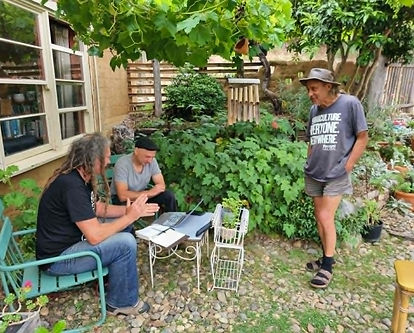
Aaron Sorensen — Elemental Permaculture
Aaron Sorensen is a permaculture teacher and designer with over two decades of experience working primarily in the Illawarra region of NSW through Elemental Permaculture. He focuses on community and school gardens, especially “Living Classroom” projects that connect students and communities with nature and resilient food systems. His approach blends permaculture ethics with education, creative learning and community engagement to inspire transformative environmental and social change.

Todd Cleary
Todd is a well known figure in the Illawarra's permaculture scene, particularly for his expertise in earthworks (swales, ponds, water harvesting) and soil health, teaching practical skills alongside projects like the Community Garden in Warrawong, transforming a wasteland into a productive food forest with community involvement.
Let's Get
Social


